
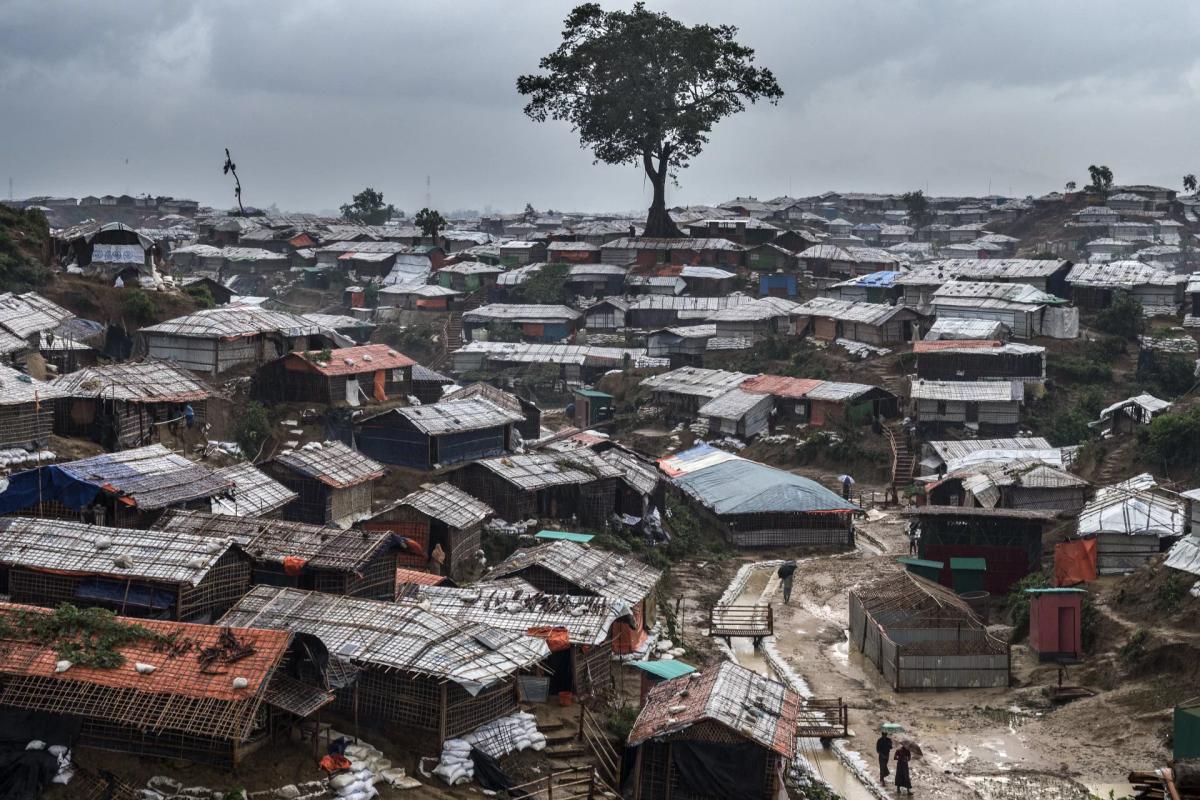
Cox’s Bazar, Bangladesh — The number of Rohingya refugees living in camps across Cox’s Bazar has increased significantly over the past year, reflecting both continued displacement from Myanmar and natural population growth within the settlements.
According to the latest figures released by the United Nations High Commissioner for Refugees, the total Rohingya population in the district reached 1,184,864 as of 28 February 2026. This marks an increase of 178,757 people compared to 1,006,107 recorded during the same period last year.
The rise is attributed to two main factors: new arrivals fleeing ongoing instability in Myanmar’s Rakhine State, and a steady number of births inside the camps, where hundreds of thousands of families have now spent years in protracted displacement.
For many Rohingya residents, the increase is not just a statistic but a reflection of a prolonged crisis with no clear resolution. “People are still coming because they feel unsafe back home,” said one community volunteer in Ukhiya, requesting anonymity due to security concerns. “At the same time, children are being born here every day. Life continues, even in hardship.”
Cox’s Bazar remains the world’s largest refugee settlement, hosting the vast majority of Rohingya who fled waves of violence, particularly following the military crackdown in Myanmar in 2017. Despite ongoing international discussions around repatriation, conditions in Rakhine State have not yet been deemed safe for large-scale returns.
Humanitarian agencies warn that the growing population is placing additional pressure on already strained resources. Shelter congestion, limited access to education, healthcare challenges, and reduced food assistance have become increasingly urgent concerns inside the camps.
Aid workers also note that a younger generation is growing up entirely within the refugee settlements, with limited opportunities and uncertain futures. “This is no longer a short-term emergency,” said a field officer working with an international NGO. “It is a long-term humanitarian situation that requires sustained attention and support.”
While Bangladesh continues to host the Rohingya population, officials have repeatedly emphasized the need for stronger international responsibility-sharing and a durable solution that ensures safe, voluntary, and dignified return to Myanmar.
For now, the rising numbers serve as a reminder that the crisis remains unresolved and that for nearly 1.2 million Rohingya in Cox’s Bazar, displacement is still a daily reality.


